In today’s environmentally conscious and quality-driven market, packaging is far more than a container—it is a vital statement of your brand’s commitment to sustainability. Compared to single-use plastics, aluminum cans are infinitely recyclable and boast higher recycling rates globally, making them the premier choice for sparkling waters, craft beers, cold brews, and ready-to-drink (RTD) beverages.
However, transitioning to eco-friendly aluminum packaging involves more than simply swapping materials. From Standard to Sleek and Slim formats, different aluminum can specifications directly impact shelf presence, consumer handfeel, filling technology, internal coatings, and sealing integrity.
This guide explores the primary types of aluminum beverage cans to help you make an informed, sustainable choice that protects both your beverage quality and the planet.
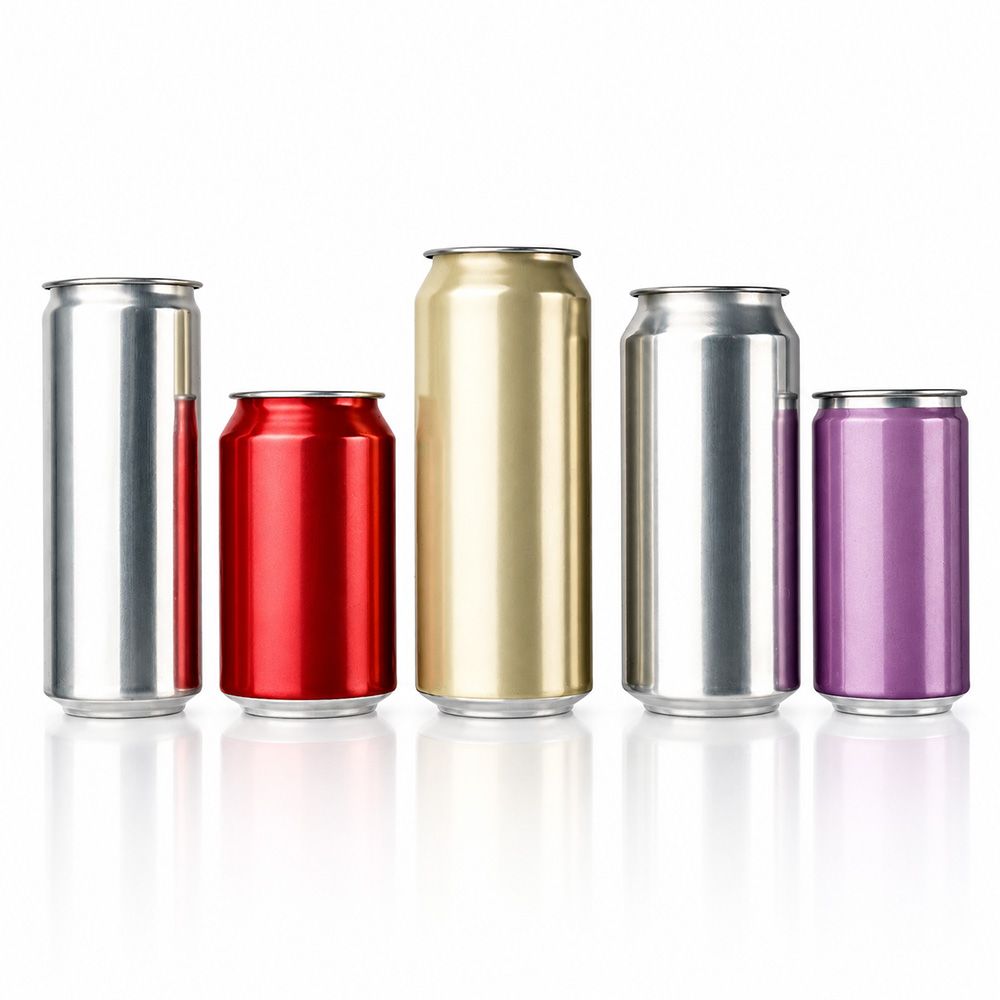
1. Common Aluminum Can Profiles & Applications
When browsing aluminum can categories, you will encounter distinct profile styles designed for specific drinking experiences and product types:
| Can Profile | Structural & Visual Characteristics | Common Volumes & Beverage Types | Sustainability & Brand Advantages |
| Standard Can | Classic wide body, high pressure resistance, highly durable. | 330ml / 355ml (12 oz) / 500ml (16 oz) Beer, traditional sodas, cider. | Established recycling supply chains; maximizes transport density to reduce freight carbon footprint. |
| Sleek Can | Slimmer silhouette than Standard, modern and premium feel. | 250ml / 310ml / 355ml (12 oz) Hard seltzers, sparkling teas, energy drinks. | Appeals to health-conscious and lifestyle-driven modern consumers. |
| Slim Can | Ultra-slender profile, compact and elegant design. | 250ml / 310ml / 355ml (12 oz) Hard seltzers, sparkling teas, energy drinks. | Highly portable; ideal for portion control, reducing beverage waste. |
| Large Formats | Larger capacities (e.g., Crowler, 500ml+). | 500ml+ / 32 oz Craft brewery takeaways, shared outdoor beverages. | Replaces large plastic jugs/bottles while offering superior UV and oxygen protection. |
2. Key Technical Factors: Matching the Can to Your Liquid
Two aluminum cans with identical outer dimensions can have completely different internal specifications depending on what goes inside. Consider these three key technical factors before finalizing your order:
① Carbonated vs. Still Beverages
- Carbonated Drinks (Seltzers, Beer, Sparkling Water): Internal pressure from dissolved CO? gives thin aluminum walls structural rigidity.
- Still Drinks (Cold Brew, Juices, Non-carbonated Water): Without internal gas pressure, lightweight aluminum cans can easily flex or buckle. These lines typically integrate liquid nitrogen dosing prior to seaming, where vaporized nitrogen creates positive internal pressure while purging headspace oxygen to maximize shelf life.
② Food-Grade Internal Coatings (BPA-NI)
Direct contact between raw aluminum and acidic liquids (such as citrus juices, wine, or coffee) can lead to product degradation.
- Modern eco-friendly aluminum cans utilize microscopic, BPA-Non-Intent (BPA-NI) protective liners.
- Pro Tip: Always perform a Product Compatibility Test with your can manufacturer using your exact liquid formula (pH levels, alcohol content, and acidity) before mass production.
③ Can Ends & Closures
The body and end (lid) are separate components that work together. Common opening mechanisms include Stay-On-Tab (SOT), Large Aperture Ends (LOE), and reclosable lids. Ensure your chosen end family aligns with your brand's ergonomic goals and sealing equipment capabilities.
3. Rocsun Eco Packaging Checklist for Brand Owners
Before launching your new beverage line or converting to eco-friendly aluminum packaging, evaluate your project with this quick checklist:
- Beverage State: Is your product carbonated or still? (Determines liquid nitrogen dosing needs)
- Distribution & Storage: Will the product require cold chain logistics or ambient room temperature storage?
- Coating Certification: Is the internal liner food-safe and taste-neutral for your formulation?
- End Standardization: Can you standardize lid sizes across multiple volumes to streamline filling and recycling efforts?
- Decoration Strategy: Are you choosing direct-printed cans (higher MOQ) or bare eco-aluminum cans with recyclable sleeves/labels?
4. Elevate Your Brand with Sustainable Packaging
Switching to infinitely recyclable aluminum cans isn’t just an environmental choice—it’s a powerful driver for brand equity in an ESG-driven market. By selecting the right can geometry, internal coating, and processing method, you protect both the taste of your beverage and the future of our environment.
Looking for Eco-Friendly Packaging Solutions tailored to your beverage line?
Contact the Rocsun Eco team today to explore customized, high-performance, and sustainable packaging solutions.