It is easy to look at a glass jar with lid and treat it as a finished item: a jar body, a closure and a seal. In real world export sourcing, most avoidable delays, re work and compliance headaches come down to items never locked into a written specification.
The jar neck finish, whether the lid properly seats onto that neck, food contact status of seal gaskets, market specific compliance paperwork and transit ready packaging are all easy to overlook when you are comparing product images online. For buyers moving from initial research to supplier evaluation, the critical work does not mean picking an attractive jar from a catalogue. It means locking your full set of constraints before sample approval and before issuing a purchase order.
One point worth stressing: a glass jar body and its closure operate as one functional unit, and your written specification must treat them that way.
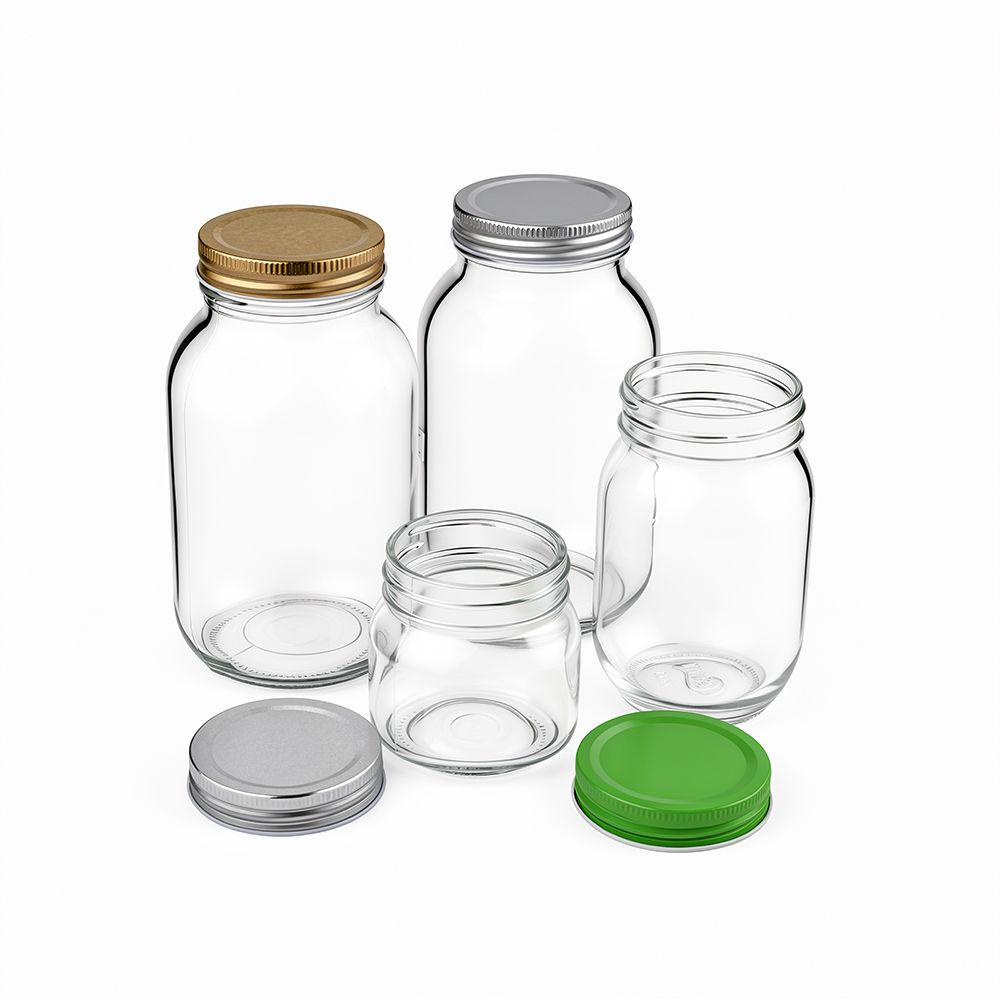
Why jar and lid must be specified as a matched set
Jar bodies and closures are engineered to work as matched pairs. A lid has to sit evenly on the jar neck, compress the gasket consistently, and open and re close cleanly even after repeated use. Problems usually surface far downstream when buyers source jar and lid from separate sources, or reuse old lids for new jar runs. You may find leaking goods on long ocean transit, inconsistent vacuum retention, or lids that fail to re-seal after the first opening.
Do not treat the seal gasket as a minor accessory. It is a direct food contact component. Many glass jar lines use food grade silicone or rubber gaskets to deliver airtight performance, dust and moisture blocking, and leak resistance for overseas shipment. These three performance attributes are separate requirements; do not accept marketing copy that rolls all three into one vague “good seal” claim.
Your intended contents shift your whole requirement set. Honey and jam sold into the EU fall under dedicated product rules that shape fill weight, headspace and usable jar capacity. Candle jars prioritise heat resistance instead of moisture barrier. Spice jars must hold up against frequent opening and closing. None of these needs can be addressed by capacity alone.
Core constraint checklist to build before contacting suppliers
You can use this list to build your requirement sheet before sending out enquiries, regardless of which manufacturer you work with.
| Constraint Category | Practical Options | What Buyers Must Confirm |
|---|---|---|
| Capacity | 200 ml-1500 ml; sample sizes through large storage formats | Distinguish nominal printed capacity versus real usable fill volume plus required headspace for your product |
| Shape | Hexagonal, round, square, cylindrical | Confirm if it uses existing stock moulds or requires custom tooling; check available label real estate |
| Glass material | Soda lime / borosilicate glass | Match material to hot fill, thermal shock and end use conditions; ask for part level test data, do not rely purely on material type claims |
| Glass colour | Clear standard; custom tinted options available | Check minimum order thresholds for non clear glass and colour consistency across repeat batches |
| Closure | Wood, aluminium, plastic, tinplate screw on lids | Neck finish compatibility, opening torque range, re-closure performance, anti rust performance for metal lids |
| Seal gasket | Food grade silicone or rubber | Secure separate food contact supporting documents for the gasket material, not only the glass jar itself |
| Decoration | Screen printing, hot stamping, decals | Confirm whether decoration touches food contact surfaces; check washing / abrasion durability for reusable jars |
| Compliance documentation | Model specific COA, factory certificates | Confirm certificate scope exactly matches your ordered model, decoration variant and target export market |
| Commercial terms | MOQ, monthly production capacity | Check whether your order volume fits standard production slots; clarify lead time bands |
The gap between what gets discussed and what actually gets delivered happens often. Writing out these constraints upfront before you request samples eliminates that gap.
Glass material selection: borosilicate versus soda lime
Material choice should follow function rather than generic “premium” branding.
Borosilicate glass is selected primarily for hot fill workflows and situations with sharp temperature swings. Soda lime glass is widely used for ambient temperature food, condiment, candle and household storage, where volume cost efficiency takes priority.
Do not assume thermal performance only from material names. Wall thickness, base geometry and rim profile change thermal shock behaviour, even within one glass material family. If you run hot filling or produce candle grade glassware, always request thermal shock test data for your exact jar geometry.
Custom coloured glass brings extra variables. Non standard colours can push up MOQ, shift lead times and create batch to batch matching risk. If you plan multiple SKU product ranges, lock in colour stability commitments before design finalisation.
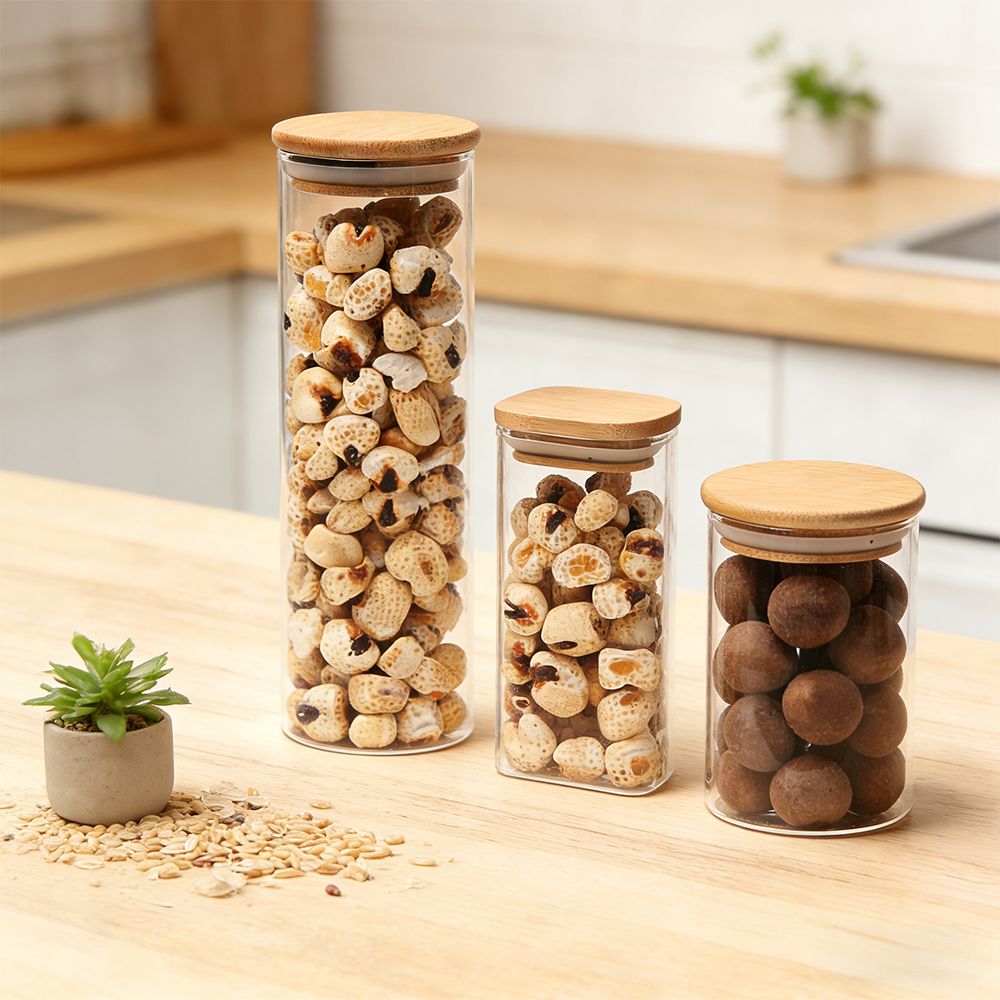
Closure & seal choices: they are not interchangeable
Each lid type serves distinct use cases:
- Tinplate twist off lids: Rust resistant metal construction for easy opening, reliable airtight sealing and transit leak protection. For acidic or high moisture food, internal lid coating becomes a formal specification point.
- Aluminium lids: Light weight metal look for brands prioritising visual appearance.
- Plastic lids: Cost effective for ranges without strict long shelf life metal barrier requirements.
- Wood lids: Mostly for presentation and gift grade positioning. Wood itself is not a barrier material; performance comes from the fitted internal food grade gasket.
Whatever lid you pick, pay close attention to the gasket. This component is frequently overlooked in buyer documentation, yet sits in direct product contact and needs its own compliance evidence.
Wide mouth jar geometry brings practical operational benefits: easier manual or semi automatic filling, simpler cleaning for reusable formats, and better hand access for stored dry goods. Remember to define shape, closure and capacity together, not as separate decisions.
What compliance paperwork you actually need
A Certificate of Analysis (COA) is a starting point, not your complete compliance package. One generic certificate cannot cover every jar variant in a supplier catalogue. Always check that the COA scope matches your exact model number, capacity, decoration and closure set up.
You will need to layer in additional documentation:
1.Factory level certification: Confirm certificate issuing entity matches your contractual supplier, and scope covers your exact product family.
2.Destination market food contact rules:
- EU: Regulation (EC) No 1935/2004 and GMP requirements from Regulation (EC) No 2023/2006. There is no harmonised EU wide glass specific rule; compliance is built from framework rules, documented GMP records plus individual member?state provisions.
- US: 21 CFR 175.300 applies for resin based coatings or decorations touching food contact surfaces.
- China: GB 4806.5 2016 governs food contact glass articles.
3.Product specific regulations: EU directives for honey (2001/110/EC) and jams & preserves (2001/113/EC) set rules for fill weight and labelling that feed back into your jar capacity and closure choices.
The EU’s PPWR Regulation (EU) 2025/40 takes general effect August 12 2026. Any glass jar entering the EU market after that date needs recyclability grading, declaration of conformity documentation and material minimisation justification. Jar weight and wall thickness are no longer purely cost items; they are formal compliance variables. Closures, gaskets and decoration must also be assessed as one complete packaging unit.
Match your jar configuration to end use application
Different applications shift your priority constraints:
- Honey: Round/cylindrical formats, focus on fill weight compliance and air tight twist off closures.
- Jam, jelly & marmalade: Square or round jars; compliance with EU product naming rules, reliable sealed closure.
- Pickles & condiments: Acid resistant coated metal closures; transit leak proof performance.
- Coffee storage: Strong moisture blocking closure to preserve aroma over shelf life.
- Spices: Small mouth jars; durability against repeated opening and closing.
- Candle jars: Thermal shock performance of exact jar geometry; dust protection closure (not food contact sealing).
- Skincare creams: Wide mouth opening; formulation compatibility and decoration wear resistance.
- Home storage jars: Re usability and easy to clean interior geometry.
Real world limits of glass jars (plan for these trade offs)
Glass brings well known practical downsides you need to factor in early, rather than discovering them after production starts.
- Weight: Heavier than plastic or metal equivalents, pushing up ocean freight costs. Light weighted glass designs help but do not eliminate this.
- Transit breakage: Dependent on divider / foam inner packaging and pre shipment drop testing. Poor protective packaging means breakages appear at your receiving warehouse.
- Thermal shock risk: Must be validated with part level testing for hot fill or candle grade applications.
- Heavy metal leaching risk: Requires raw material and finished goods testing for lead and cadmium. Do not take this for granted.
- Recycling reality: Glass is inherently recyclable, but real recovery rates depend on local collection infrastructure in your destination country.
- Low volume economics: Standard priced glass jar production usually carries a meaningful MOQ threshold, and it is not as flexible for tiny test runs as some plastic alternatives.
Plastic and metal remain valid alternatives for weight sensitive, high drop risk or ultra low volume projects. Material selection should always follow your application requirements, not general preference for glass.
Commercial terms to lock in during evaluation
Technical suitability means nothing if commercial terms do not fit your order profile. Key points to align before you commit:
- Standard pricing MOQ, monthly production capacity
- Tiered lead times by order volume; note that crossing volume tiers can change quoted production windows
- Agreed Incoterms: EXW / FOB / CIF
- Payment schedule
- Pre shipment inspection: fix test items and AQL acceptance criteria before production starts. Retrofitting acceptance rules after goods are manufactured creates difficult commercial negotiations.
At pre shipment stage, you can still correct seal defects, rim flaws and decoration errors at far lower cost. Once goods are shipped, corrective action becomes expensive and slow.
Looking ahead: three trends shaping glass jar sourcing
Three shifts will keep reshaping glass jar procurement over coming years:
- Weight optimised glass design: Driven by EU PPWR packaging minimisation obligations. Suppliers that maintain mechanical strength while reducing jar weight will hold an advantage for export focused buyers.
- Decoration treated as compliance item: Printing, hot stamping and surface coatings now need review against both food contact rules and recyclability requirements, not purely visual checks.
- More complete documentation requirements: As EU rules rely on framework obligations and GMP rather than single harmonised glass certificates, buyers need to assemble full qualification files combining COA, factory certificates, coating declarations and market specific test evidence.
Glass jars with reliable lids and seals remain a strong, reusable packaging option for premium food, condiment, candle and cosmetic lines. Successful sourcing simply demands more upfront specification work than most buyers expect.
Frequently Asked Questions
Q: What capacities and shapes are available for glass jars with lids?
Glass jars cover 200 ml up to 1500 ml, in hexagonal, round, square and cylindrical formats. Always separate nominal capacity from usable fill volume plus required head space for your actual product.
Q: Which lid and seal set ups work best for food, candle and cosmetic goods?
Available lids include tinplate twist off, aluminium, plastic and wooden options. Seals use food grade silicone or rubber gaskets. For candle applications, thermal shock performance of the jar geometry matters more than lid sealing performance for food preservation.
Q: What compliance documents should I request with glass jar orders?
Start with model specific Certificate of Analysis. Add factory level ISO 9001 / FDA / CE scope checks, gasket food contact declarations, coating compliance where decoration touches product, plus destination market evidence: EU 1935/2004 + GMP documentation, US 21 CFR 175.300 for coatings, or China GB-4806.5 2016 as applicable. From August 12 2026 add EU PPWR recyclability related documentation for EU bound shipments.
Q: What risks occur during glass jar transit and how are they managed?
Four core risks: breakage, leakage, thermal shock failure and heavy metal release. Mitigations include foam/divider protective packaging plus drop testing; 100 % airtightness testing; part level thermal shock test reports; raw material and finished goods heavy metal testing under FDA / SGS standards.
Q: How do glass jars compare to plastic and metal containers?
Glass offers inertness, re usability and premium shelf appeal. Drawbacks are higher weight, breakage risk, thermal shock sensitivity and higher MOQ for standard run pricing. Plastic and metal perform better for weight sensitive or high impact exposed applications. EU bound projects must also factor PPWR packaging minimisation and recyclability rules.
Working to finalise your glass jar specification for export Send over your target fill volume, jar format, closure preference, decoration needs and order volume expectations. Our team can walk through specification review, sample planning and export order execution. Contact our sales team or request a quotation online.