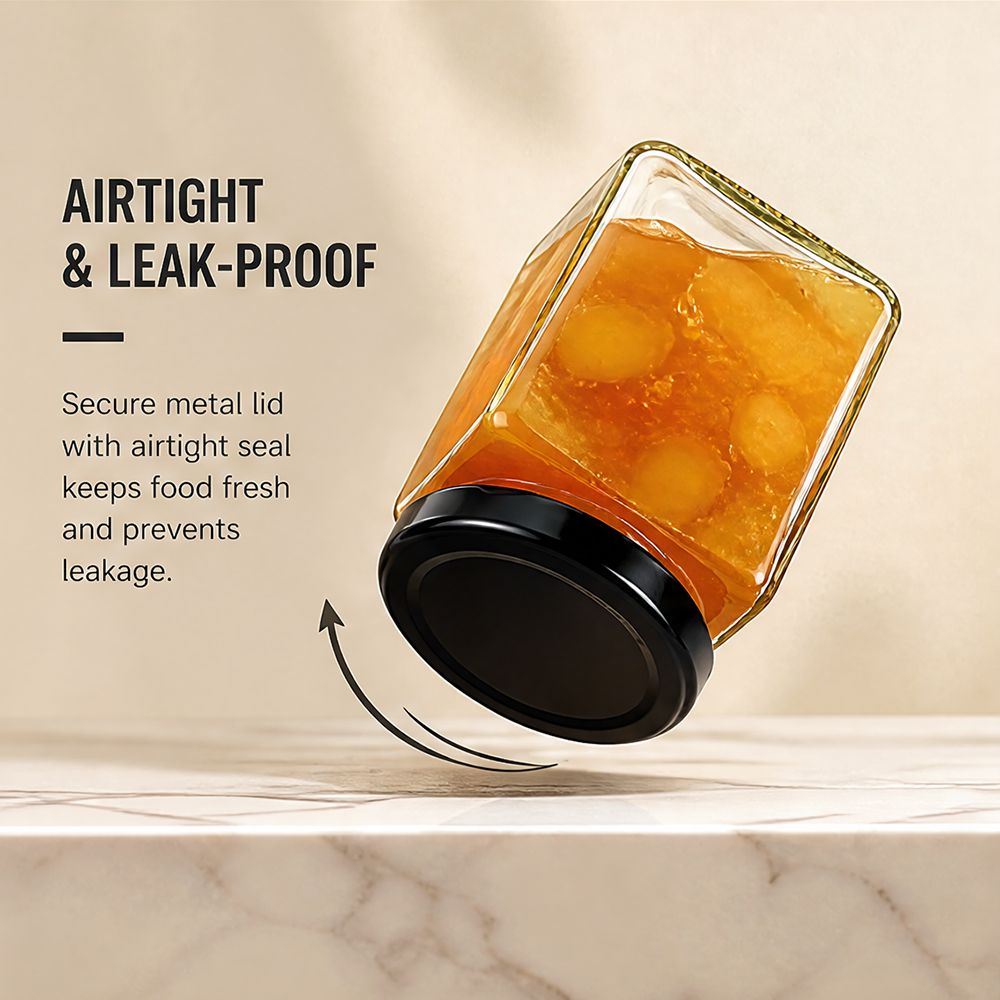
“Leak-proof” and “heat resistant” are the two most useless phrases in a glass jar purchase specification. Seal integrity and thermal stability are critical, but these vague terms give you no verifiable standard once goods arrive.
A supplier may agree to “leak-proof” on your PO, yet jars leak at your filling line weeks later — and your specification gives you no enforceable basis.
This guide shows how to replace vague descriptors with clear clauses that define test methods, sampling scope, acceptance criteria and batch records. It uses HK Rocsun — the Hong Kong–based global marketing and export arm of Anhui IDEA Group, operating glass, plastic and metal packaging factories in mainland China — and its pre-shipment testing framework for glass jar orders as an example. The goal is to build a defensible specification usable with any supplier you select.
Start with the risks you need to mitigate
Glass jar seal and thermal failures stem from multiple separate root causes, each requiring dedicated controls:
- Leaks may come from improper cap torque, degraded or misaligned gaskets, pressure shifts during transit or long-term inverted storage.
- Thermal cracking can be triggered by hot filling, rapid temperature swings (e.g. fridge to stovetop), dishwasher cycles or uneven heat from candle use.
- Transit breakage depends primarily on packaging cushioning, divider design and pallet stacking, not the jar itself.
- A hidden hazard: lead and cadmium leaching from glazes, inks, coatings or metal closures, accelerated by acidic, hot or oily contents, long storage or surface abrasion.
A sound specification does not state “this jar does not leak”. It defines test conditions, test methods, acceptance thresholds and required documentation.

Seal integrity: define cap torque first, then airtightness
Many specs jump directly to “100% airtightness testing”. Full airtight inspection is essential, but two parameters must be locked in first:
- Closure interface: Confirm the finish type (lug Mason jar, twist-off jam jar, lined candle lid, etc.). Each closure design has unique sealing behaviour and torque requirements. Airtight tests using the wrong lid have no value.
- Torque window: Too low and the seal leaks; too high and the gasket deforms, also causing leaks. Specify clear upper/lower torque limits plus a calibration schedule for capping equipment.
Once these are set, 100% unit airtight testing becomes meaningful. Sampling only reflects average batch performance; full inspection catches individual defective units that can trigger full batch rejection.
HK Rocsun performs airtightness testing on every jar before shipment, paired with torque control and regular equipment calibration. Always group torque requirements and airtightness rules together in your spec, as they function as one linked system.
Thermal shock: specify a temperature differential, not just “pass”
“Heat resistant” contains no actionable data. It does not define temperature delta, hold time or starting temperature.
Thermal shock requirements must be stated as a measurable tolerable temperature differential matched to your application. Use this ΔT value to align with your filling, pasteurisation, dishwasher or candle operating profile.
This value is not universal: soda-lime glass vs borosilicate, thick-walled vs thin-walled vessels, small spice jars vs large pickle jars all perform differently. One test report cannot cover all variants.
Document thermal shock results as a numerical differential, not a simple pass/fail mark. Use this figure for filling line guidance and consumer label instructions where applicable.
Drop testing: validates the packed shipment, not the bare jar
This is a common buyer mistake. A “jar must pass drop test” clause is misleading. Drop testing evaluates the complete packed setup: dividers, cushioning, carton layout, unit count and pallet stacking.
Changing any packaging component invalidates old drop test results, even if the jar itself stays identical.
- Write drop test requirements against your final packaging configuration.
- Schedule drop testing as a pre-shipment activity, not a generic marketing quality claim.
Heavy metals: certificates must match your exact order
Lead and cadmium compliance relies on documentation rather than inline inspection. Raw materials and finished goods are tested against FDA and SGS standards, with periodic random retesting to maintain valid records.
Request separate raw material and finished product reports, define test scope and confirm re-sampling rules.
Critical note: generic “glass jar” certificates are not acceptable. The report must reference your exact jar model, glass colour and closure type to match your PO.
Prioritised parameters by jar application
The core testing framework stays consistent; only the priority metrics shift by product use case:
- Honey & jam jars: Thermal performance is key, tied to hot filling or end-user reheating. Seal specs must withstand long shelf life with high-sugar, acidic contents.
- Candle jars: Sustained heat exposure, not short thermal shock. Wall thickness, rim and base geometry are safety-critical. Add torque and airtightness clauses only if sold with lids.
- Mason & general food jars: Breakage risk in transit dominates. Drop testing, divider and carton specifications are the highest priority.
- Spice & large storage jars: Small closures are torque-sensitive; large jars face high stacking pressure. Both require torque limits, full airtight testing and matching heavy-metal compliance documents.
- Coffee jars: Aroma retention makes airtightness and torque control paramount. If lids have special linings or coatings, request coating compliance alongside mechanical test reports.
Confirm these five items before negotiating test standards
Lock these details internally before agreeing AQL and test items with your supplier:
- Product contents and filling process (sets required thermal ΔT)
- Closure type and approved torque window
- Full packaging configuration (dividers, foam, carton quantity, pallet pattern)
- Target market compliance rules (defines heavy-metal test scope)
- Standard batch report format for consistent side-by-side comparison
Only then finalise test items, AQL and reporting templates. If you reverse this order, acceptance criteria get negotiated after goods are packed.
FAQ
Q: The supplier says every unit gets airtightness tested. How do I verify?
Ask for a batch report showing unit-level results, not just a sampling summary. Quotation pricing also signals the difference: 100% full inspection costs more than sampling.
Q: Is a “passed” thermal shock report enough?
No. Request test method, start/end temperatures, ΔT value and sample quantity. Without a specific temperature differential, you cannot set safe filling parameters.
Q: If we switch packaging, do we need to redo drop testing?
Yes. Drop tests apply only to the packed configuration. New dividers, foam, carton counts or pallet patterns require fresh validation.
Q: The FDA/SGS certificate lists a different jar model.
Ask for a report matching your purchased model. If materials and processes are identical but model names differ, obtain a signed supplier equivalence statement. Generic certificates are not acceptance documents.
Q: Does the testing scope affect MOQ or price?
Testing requirements are separate from core commercial terms. HK Rocsun’s standard glass jar mass-production MOQ is 5,000 pcs, with FOB/CIF/EXW terms, 30% T/T deposit pre-production and 70% T/T against B/L copy. Testing scope locks acceptance criteria before production starts, not after packing. Confirm test items and AQL for your jar during quotation.
Closing
A glass jar specification is enforceable only when it defines a test method, inspection coverage, acceptance criteria and required batch records. Without these, it is just vague descriptive language.
The enforceable clauses are straightforward: 100% unit airtight testing, calibrated torque limits, thermal shock expressed as a temperature differential, drop testing tied to your final packaging setup, and heavy-metal reports matched to your exact jar and closure. Every shipment must include its corresponding batch test record.
With these clauses, both parties understand inspection rules, deliverable evidence and non-conformance handling. Without them, you will end up debating what “leak-proof” was supposed to mean.
To discuss custom test parameters for your jar or request a batch report template, contact HK Rocsun via https://www.rocsuneco.com/. Share your filling temperature, closure type and packaging layout, and the team will send you a tailored test checklist and report template.