If you line up every possible failure of a glass jar and try to test all of them equally, you end up with a checklist that is long, costly, and impossible to close before the container leaves. The practical move is to rank the risks.
Ranked by how each failure actually reaches a buyer and how much of a shipment it can take down, the four that earn priority are: breakage first, leakage or seal failure second, thermal shock third, and heavy metal release fourth. This is a procurement prioritization — how a buyer should sequence verification — not a measured failure-rate study. Two controls sit at the top of that order: a 100% airtightness test on every unit, and a pre-shipment drop test on the packed configuration. Lead and cadmium are handled differently again, through FDA and SGS testing plus randomized follow-up.
HK Rocsun is the global marketing and export arm of a packaging manufacturing group, headquartered in Kowloon, Hong Kong, backed by integrated manufacturing in mainland China across glass, plastic and metal. The controls described below come from HK Rocsun's stated glass jar risk-control approach, product specifications and application requirements. Use the ranking to order your own inspection checklist and to decide which evidence to ask for first.
Why the Four Risks Need an Order
Each of the four fails at a different control point, and that is exactly why a flat checklist misfires.
- Breakage is mechanical — handling, carton stacking, pallet movement, transport vibration.
- Leakage or seal failure is a closure-integrity problem — it lives at the finish, the lid, the gasket and the capping method.
- Thermal shock is a temperature-differential problem — it shows up after filling, washing or storage.
- Heavy metal release is a food-contact compliance problem — a documentation and testing gate, not a line-side visual check.
- Most glass jar buyers already ask about breakage and leakage. The genuinely hard decision is what to verify first, which evidence to pull before a purchase order, and which test can be sampled rather than run on every unit. That is where the ranking earns its keep.
- A rule worth keeping: prioritize the failure that can downgrade a whole shipment before the one a certificate already covers. Breakage and seal failure can sink an entire lot. Heavy metal release is non-negotiable, but it is managed through material and finished-product testing, not through a worker eyeballing units on the line.
Glass Jar Risk Control Is Application-Specific
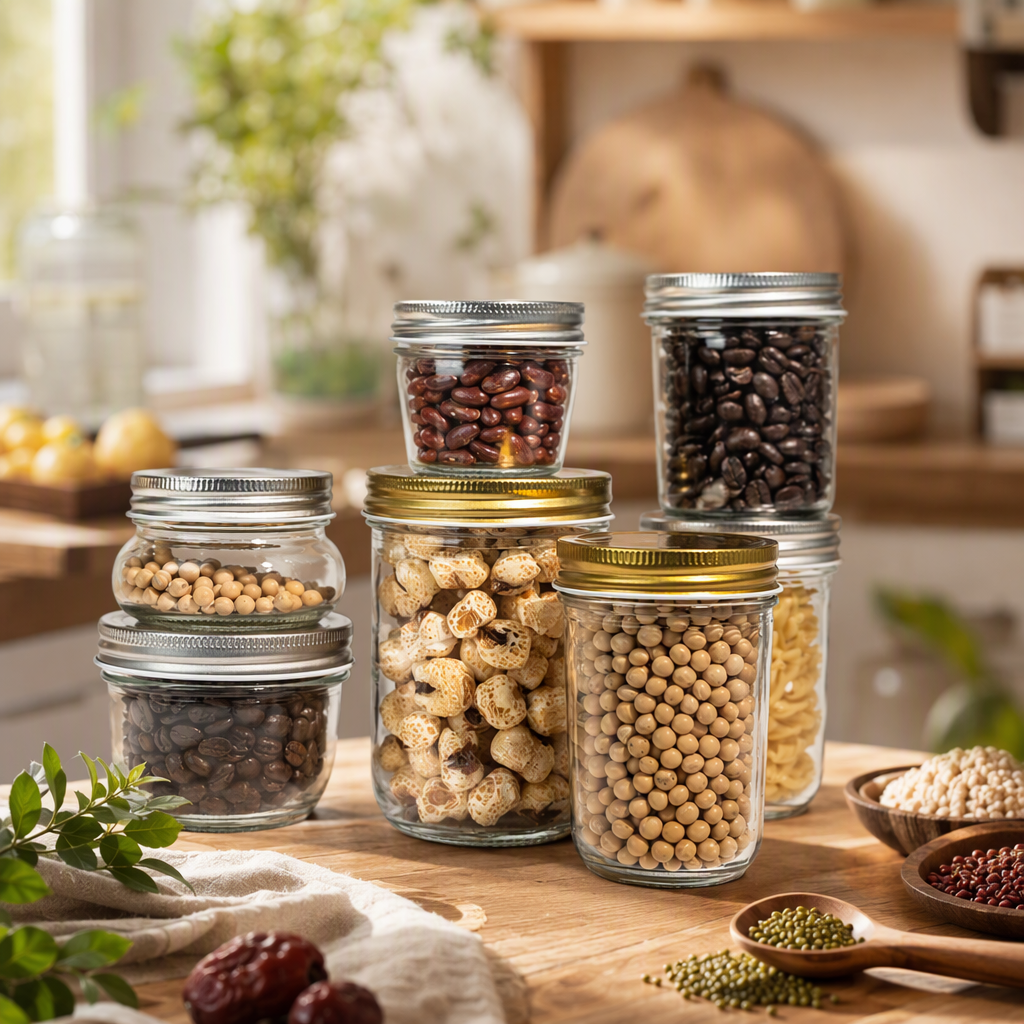
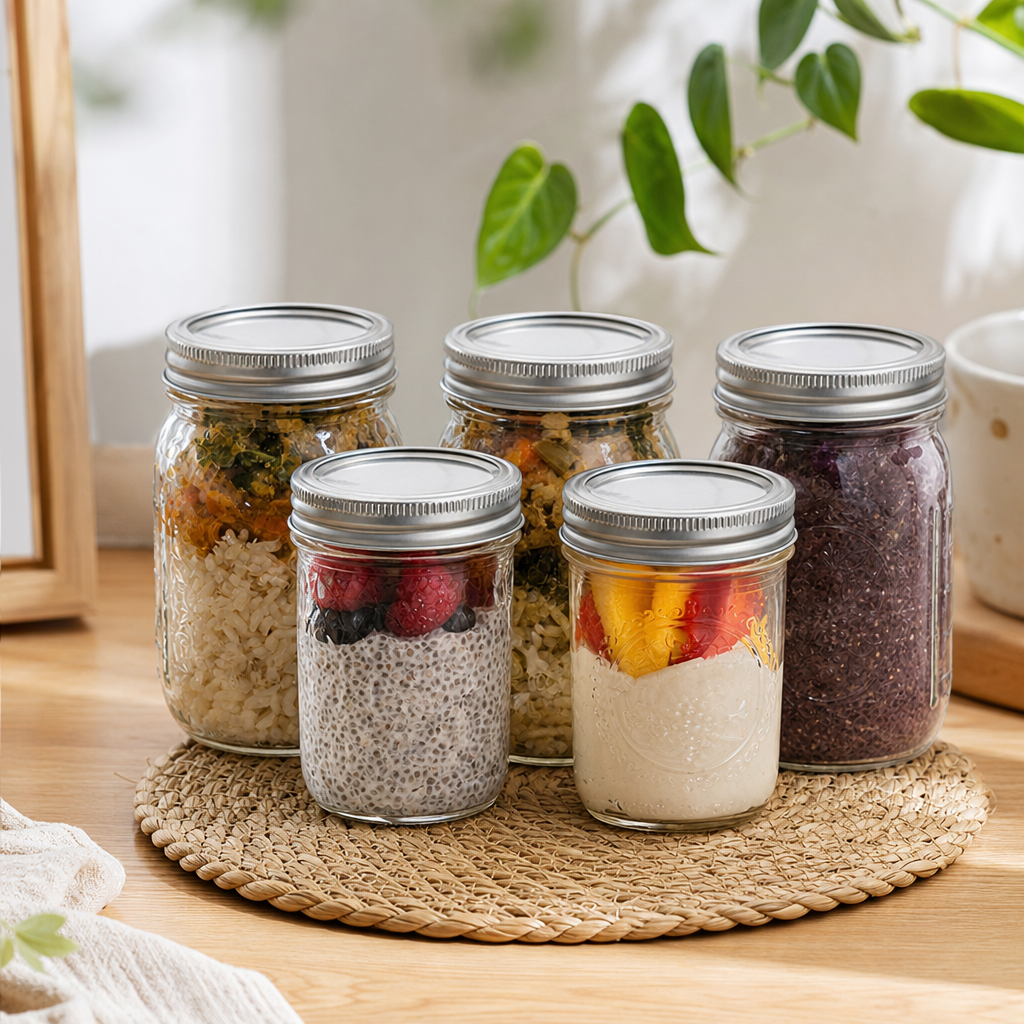
Glass jars run across food, condiment, honey, jam, coffee, spice, candle, beauty and home storage. The HK Rocsun range spans glass storage jars, mason jars, freezing jars, honey jars, jam jars, coffee jars, pudding jars, spice jars, pickle jars, candle jars and cream jars. Capacities cover 200, 250, 500, 750, 1000 and 1500 ml, in hexagonal, round, square and cylindrical shapes. Glass is borosilicate or soda-lime, clear or customized color. Closures take food-grade silicone or rubber seals with wood, aluminum, plastic or tinplate screw caps.
 |  |  |
That variety is precisely why risk control cannot be copy-pasted from one program to the next. A mini jar for a spice pack handles differently from a large jar for pickles. A honey or jam jar may fill on a manual or semi-automatic line; a coffee or condiment jar may run on a filling machine, capper and labeller. The stated application scenarios — indoor storage, normal room temperature, a dry environment, sealing preservation and display packaging — are moderate, but filling and transport still load the jar with mechanical and seal stress.
Food-contact rules add a second layer. In the EU, Regulation (EC) No 1935/2004 requires food-contact materials not to transfer constituents into food in quantities that endanger health, change composition unacceptably, or deteriorate organoleptic qualities. Commission Regulation (EC) No 2023/2006 requires documented good manufacturing practice for food-contact material manufacturing. In the US, 21 CFR 175.300 governs resinous and polymeric coatings used as the food-contact surface, including organic coatings on glass containers and closures. China applies GB 4806.5-2016 to glass in contact with food. Together these turn heavy metal release into a documentation and testing duty, not just a visual quality check.
HK Rocsun's stated position: raw materials and finished products are tested by FDA and SGS under food-grade compliance for lead and cadmium, with regular randomized follow-up; every jar undergoes 100% airtightness and thermal shock testing; packaging uses dividers and foam cushioning with drop tests before shipment. Those controls map directly onto the four-risk ranking below.
Ranking the Four Risks
The order is set by three questions: how likely the failure is to appear during normal packing, filling, transport or storage; how much of a shipment one event can affect; and what evidence a buyer can verify before shipment.
Rank 1 — Breakage
Glass jars face handling, carton stacking, pallet movement and transport vibration long before they reach a filling line or an end customer. One impact can damage several units in the same carton, and the cost lands fast: lost product, contaminated packaging, line stoppage, manual sorting, returns, and a real injury risk from broken glass. On a large-jar program the cost per event climbs — fewer units per carton, less efficient replacement freight.
The stated control is dividers and foam cushioning plus pre-shipment drop testing, and the two address different failure points. Dividers cut jar-to-jar contact; foam absorbs impact energy; the drop test checks the packed configuration, not the bare jar. Verify the drop-test report and the packing specification before production, not after the goods are built.
Breakage control must also match the format. Round, square, hexagonal and cylindrical jars do not pack alike. A mixed-size jar set needs a carton layout that stops movement between compartments, and a mini jar may need different cushioning from a large one. So the inspection question is narrow: show the exact packed configuration that was drop tested, and confirm production packing uses the same dividers, foam and carton arrangement.
Rank 2 — Leakage or Seal Failure
This can happen with the glass body perfectly intact. The closure is a system — glass finish, jar lid, food-grade silicone or rubber seal, and the capping method — and a jar can pass a visual check yet fail under transport vibration or pressure change. Leaked contents stain labels, contaminate neighbours, and turn a food-grade lot into a rejection.
The stated control is a 100% airtightness test on every unit before shipment under seal-integrity control — a stronger stance than sampling alone. A 100% test is unit-level and catches individual seal defects rather than estimating a lot average. The application requirement calls for a leak-proof seal, and the tinplate twist-off lids are specified as rust-resistant, easy to open, and airtight enough to preserve freshness and prevent transport leakage.
Still ask how the test runs and what the pass/fail criteria are. The commercial terms state goods are inspected by pre-shipment test before leaving, with a report provided, and that test items and AQL are agreed before production starts. A report produced after packing is useful, but weaker than a pre-agreed protocol. For honey, jam, coffee or condiment programs, fix the closure and filling method before approving the airtightness protocol.
Rank 3 — Thermal Shock
Thermal shock needs a temperature differential, not ordinary handling, so it ranks third — but the consequence is still ugly: a jar can crack, weaken or fail after filling, washing or a storage swing. You get a delayed release, rework, or a complaint that surfaces after the goods have left. Candle jars and jars moving between warm filling and cooler storage are the practical cases where you push for evidence early.
The stated control is thermal shock testing on every jar, which is a strong position because it tests the body, not only the carton. Request the test method and the condition range, and confirm it reflects your real filling and storage profile. A freezing jar or candle jar sees a different temperature profile from a shelf-stable honey or spice jar — never assume one report covers every size or every glass type. Thermal shock also talks to breakage: a jar that survives a drop can still fail after a temperature change, and vice versa. Request both controls together rather than trading one for the other.
Rank 4 — Heavy Metal Release
Lowest day-to-day likelihood, still a compliance gate. The risk is lead or cadmium releasing above applicable limits from raw material or finished product. The cost is not a broken jar — it is a regulatory rejection, recall, market-access block or a failed customer specification. That is why it is handled through material and finished-product testing, not line-side visual inspection.
The stated control is FDA and SGS testing of raw materials and finished products under food-grade compliance, plus regular randomized follow-up. The facilities are described as ISO 9001, FDA and CE-certified, which supports the quality-system side. The evidence that actually counts is a current test report that names the product, the material, the standard and the result. A generic certificate with no product identity is not enough for a food-jar program. Match the destination rules too — the EU framework and GMP regulation, the US coating rule under 21 CFR 175.300, and China's GB 4806.5-2016 all point to a documented food-contact control system. You are not rewriting the regulation; you are confirming the supplier can produce the test evidence for the specific jar and closure you are buying.
Why 100% Airtightness and Drop Testing Sit at the Top
They answer the two risks that can change a shipment's status before you open the first carton. A 100% airtightness test catches seal failure at the unit level; pre-shipment drop testing catches breakage at the packed-configuration level. One is a seal-integrity control, the other a transport-protection control, and both generate evidence before the goods leave — which is the whole point of a pre-shipment control.
Heavy metal release matters just as much, but it is controlled differently: material selection, FDA and SGS testing, randomized follow-up. You cannot screen every jar for lead on the packing line the way you can check every unit for airtightness. Putting compliance testing and 100% seal testing in different parts of the checklist is not a demotion — it is assigning the right control to the right failure.
What Buyers Should Verify First
The sequence follows the ranking, not the ease of asking — and it avoids the common mistake of hoarding certificates before confirming the packed product survives transport.
- Confirm application and closure. Food, condiment, honey, jam, coffee, spice, candle or home storage? Nail the lid type, the food-grade silicone or rubber seal, and the filling/capping method. The application requirement includes food-grade materials, FDA and LFGB compliance, and a leak-proof seal.
- Request the 100% airtightness protocol. How every unit is tested, what is a pass/fail, how the report is issued. HK Rocsun states every jar undergoes 100% airtightness testing before shipment under seal-integrity control.
- Request the drop-test and packing spec. Confirm dividers, foam cushioning and carton layout; verify production packing matches the tested configuration.
- Request thermal shock evidence. Confirm method and condition range, matched to jar size, glass material and application.
- Request FDA and SGS lead/cadmium reports. Confirm the report identifies the exact jar and closure being purchased.
- Verify specs against the PO. Capacity, shape, glass type, colour, seal material, printing method, logo customization. The range spans 200–1500 ml; hexagonal, round, square and cylindrical shapes; borosilicate or soda-lime; clear or custom colour; silicone or rubber seals; screen printing, hot stamping or decals.
- Agree test items and AQL before production. Goods are inspected by pre-shipment test with a report provided; items and AQL are fixed before production starts.
- Confirm commercial terms and documents. MOQ 5000 pcs; FOB, CIF or EXW; 30% T/T deposit before production, 70% T/T against a copy of the B/L. Lead time 7 days for 5,000–10,000 pcs and 20 days for 10,000–50,000 pcs; above 50,000 pcs negotiable.
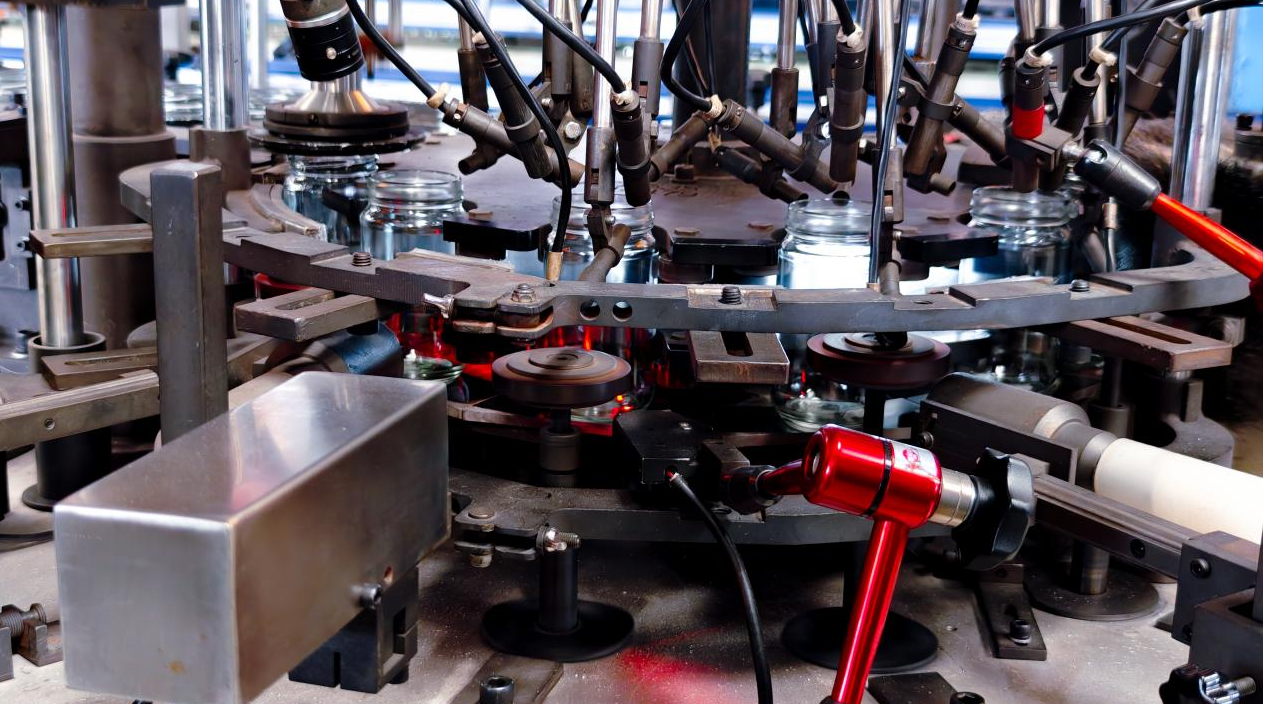
- Manual quality inspection is a final check — not a substitute for a 100% airtightness test or a pre-shipment drop test. Image: manual inspection at HK Rocsun.
How the Ranking Shifts by Application
Food packaging. The requirement is explicit — food-grade materials, FDA and LFGB compliance, leak-proof seal — for the food and condiment industries. If the contents are liquid or semi-liquid, seal failure can jump ahead of breakage: a honey or jam jar with a poor seal is a direct product-loss event. So the 100% airtightness test belongs at the top of a food-jar checklist even while breakage stays the more visible transport risk.
Coffee processing. In Australian and global coffee projects, glass jar packaging was used for canned coffee production with stable operation and food-grade requirements met. These support the food-grade and sealing emphasis, but they do not replace verifying the jar and closure spec for your fill.
Pickles. The material is specified corrosion-resistant and food-grade with sealing performance highlighted. That adds a product-contact angle to the seal and glass-body checks; a pickle program should confirm closure, seal material and food-contact reports together. A jar set or large-jar program may also need a carton-layout review, since packed weight and handling differ from a small spice or mini jar.
Candles. Thermal shock and heat exposure are live concerns, so request thermal-shock evidence early — while still keeping a sound packing configuration and a closure suited to the candle format. The four risks do not change; which control you verify first does.
FAQ
Are glass jars leak-proof?
HK Rocsun states every unit passes a 100% airtightness test before shipment under seal-integrity control, and the application requirement includes a leak-proof seal. Confirm the method, acceptance criteria and report format before production starts.
What tests should be requested before shipment?
The 100% airtightness test on every unit, pre-shipment drop testing, thermal shock testing, and FDA/SGS lead and cadmium reports — plus a pre-agreed set of pre-shipment inspection items and AQL before production.
How are lead and cadmium controlled?
Through FDA and SGS testing of raw materials and finished products under food-grade compliance, with regular randomized follow-up. Facilities are ISO 9001, FDA and CE-certified. For a specific order, request a report that names the jar and closure you are buying.
How do I evaluate China glass jar manufacturers for jam and honey filling?
Check food-grade compliance, leak-proof seal control, capacity range, closure compatibility and pre-shipment reports. HK Rocsun supplies 200–1500 ml jars for food and condiment use, with food-grade silicone or rubber seals and tinplate twist-off, aluminum, plastic and wood lid options; the application requirement includes FDA and LFGB compliance and a leak-proof seal.
What are the MOQ, lead time and payment terms?
MOQ 5000 pcs for standard mass-production pricing. Lead time 7 days for 5,000–10,000 pcs, 20 days for 10,000–50,000 pcs, negotiable above 50,000 pcs. Terms FOB, CIF or EXW; 30% T/T deposit before production and 70% T/T against a copy of the B/L. To start, request a sample or quote and confirm the test items and AQL before production.
Conclusion: A Shorter, Stronger Checklist
The ranking gives a pre-shipment order. Check breakage protection and the drop test first, because transport damage can take out a whole carton. Check the 100% airtightness test next, because a seal failure turns a food-grade shipment into a rejection. Then verify thermal shock for the jar and application, and close the compliance file with FDA and SGS lead/cadmium reports plus randomized follow-up.
This order also keeps the checklist honest. It does not ask a certificate to prove transport protection, and it does not ask a visual inspection to prove heavy-metal compliance. It gives each control the failure it can actually prevent. For HK Rocsun glass jar programs, the stated controls are 100% airtightness testing, thermal shock testing, dividers and foam cushioning, pre-shipment drop testing, FDA and SGS lead and cadmium testing, and pre-shipment inspection with agreed test items and AQL.