A food jar program becomes buyable once four questions have written answers: which jar format and closure can the supplier actually make, which customization levers does it really control, how does it prove food-contact conformity for your market, and what MOQ, lead time and payment terms will it commit to in a contract. Everything else in a sourcing call is a variation on those four.
HK Rocsun is the Hong Kong marketing and export center for a mainland China packaging group (ISO 9001, FDA and CE certified), producing glass jars and aluminum cans on an OEM and ODM basis. This guide is for buyers who have already chosen glass and are now testing whether one supplier's capability matches one specific jar brief.
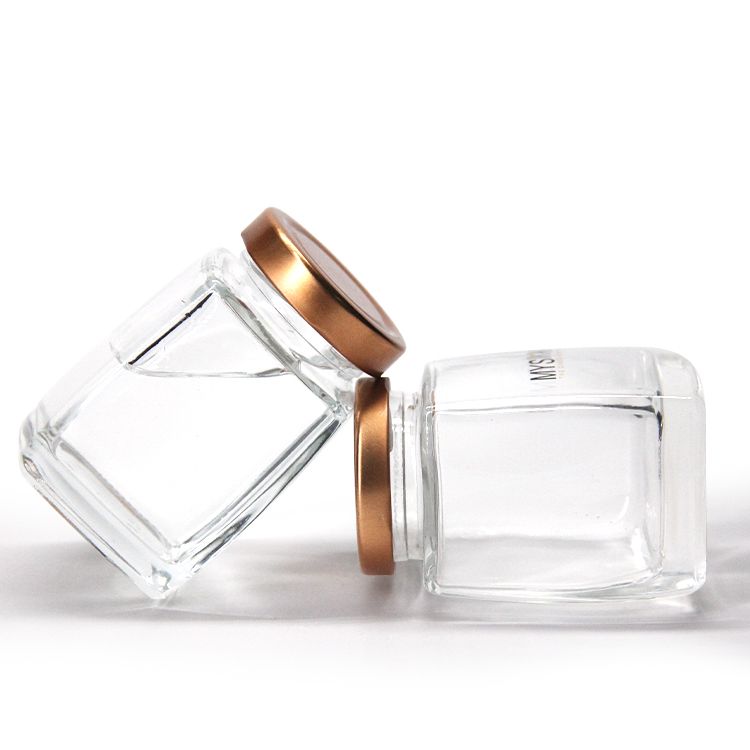
Why Food Jar Briefs Stall Between Evaluation and Execution
Most food jar projects don't fail on price. They fail because the brief reaches the supplier in a form the supplier can't quote against, and the buyer only finds out after several rounds of offers that can't be compared. Three patterns recur.
The first is format drift. "Food jar" is a family term, not a spec. A honey jar, jam jar, spice jar, candle jar and a one-liter preserving jar are different projects with different closures, decoration density and compliance routes. Lock the format and closure at the start, or you end up comparing incomparable offers.
The second is decoration assumed rather than specified. Logo, color, surface handling, printing and graphic are separate levers, and each has to be fixed before costing, not after.
The third is compliance evidence arriving late. The EU has no harmonized material-specific measure for glass, so conformity rests on a framework safety duty, mandatory GMP documentation and national provisions. That is a paper trail, not a single certificate, and buyers who ask for it at PO stage often find gaps that push a launch date. The gap between evaluation and execution is a specification and documentation gap.
The 2026 Rulebook and Supply Base
Classification. Glass containers for packing goods sit under HS heading 7010, whose text explicitly includes preserving jars of glass; food-and-packing glass containers fall under HS 7010.90. Use this line when checking duty treatment and comparing sourcing countries.
Food-contact layer. Regulation (EC) No 1935/2004 requires that food-contact materials (jars and closures) don't transfer constituents that endanger health, alter composition, or worsen organoleptic properties. Regulation (EC) No 2023/2006 obliges producers to run documented GMP and QA. With no harmonized EU glass measure, compliance is shown through framework + GMP + member-state provisions. Decorated ware adds a US layer: resinous/polymeric coatings on the food-contact surface fall under 21 CFR 175.300. China applies GB 4806.5-2016.
Sustainability layer. Regulation (EU) 2025/40 (PPWR) replaces the older directive framework with EU-wide design-for-recycling requirements and material-specific recycling targets. For a jar spec, that turns wall thickness and jar weight into a compliance variable, not just a cost variable.
Product-standard layer. Council Directive 2001/110/EC (honey) and 2001/113/EC (jam/jelly/marmalade) constrain fill weight, headspace and labeling — which in turn constrain capacity and closure selection.
Supply base. Large groups (O-I Glass, Verallia, Ardagh, Vidrala, Stoelzle, ?i?ecam) sit alongside export-focused OEM/ODM specialists. Volume contracts go to the first tier; flexible mid-volume custom runs to the second. Candle jars sit outside food-contact logic entirely — ASTM F2417 makes jar geometry and heat behavior a safety variable.
The Capability Set, as Decision Inputs
Most food jar projects don't fail on price. They fail because the brief reaches the supplier in a form the supplier can't quote against, and the buyer only finds out after several rounds of offers that can't be compared. Three patterns recur:
- Format drift. "Food jar" is a family term, not a spec. A honey jar, jam jar, spice jar, candle jar and a one-liter preserving jar are different projects with different closures, decoration density and compliance routes. Lock the format and closure at the start or you compare incomparable offers.
- Decoration assumed, not specified. Logo, color, surface handling, printing and graphic are separate levers, and each has to be fixed before costing — not after.
- Compliance evidence arrives late. The EU has no harmonized material-specific measure for glass, so conformity rests on a framework safety duty, mandatory GMP documentation and national provisions. That's a paper trail, not a single certificate, and buyers who ask for it at PO stage often find gaps that push a launch date.
- The gap between evaluation and execution is a specification and documentation gap.
Order Volume, Lead Time, and the Commercial Frame
The glass jar line runs at 500,000 pieces per month, and the MOQ for standard mass-production pricing is 5,000 pieces. Lead time is banded: an order of 5,000 to 10,000 pieces runs in 7 days, 10,000 to 50,000 pieces runs in 20 days, and anything above 50,000 pieces is negotiated per order. Delivery terms are available as FOB, CIF or EXW — EXW suits buyers with their own forwarder, FOB suits buyers who nominate the vessel and pay freight, and CIF suits buyers who want the supplier to cover freight and insurance to the destination port. Payment is a 30% T/T deposit before production with the 70% balance against a copy of the bill of lading, which ties the balance to a shipping document rather than a promise. Quality control is pre-shipment inspection, after-sales support is remote, and the export footprint is global.
Conformity and Quality Evidence
Facilities are ISO 9001 certified; products have passed FDA and CE. The control set you can test against your own risk register:
- Seal integrity — 100% airtightness test on every unit before shipment, plus cap torque control with defined limits and periodic calibration.
- Thermal stability — a Thermal Shock Test defines the tolerable temperature differential, written into filling instructions.
- Transit protection — dividers and foam separate each unit; drop testing before shipment.
- Heavy metals — glaze, coating, ink and metal parts sourced to food-grade requirements; raw materials and finished goods tested by FDA and SGS for lead and cadmium.
- Batch analysis — Certificate of Analysis ZTS2510311ZZRC, issued 5 Nov 2025 by Shenzhen ZTS Testing Service, covering glass jar model IDG102 against EPA 3052, ASTM D3421, EN 14372, EN 14350 and EPA 3540C/3550C.
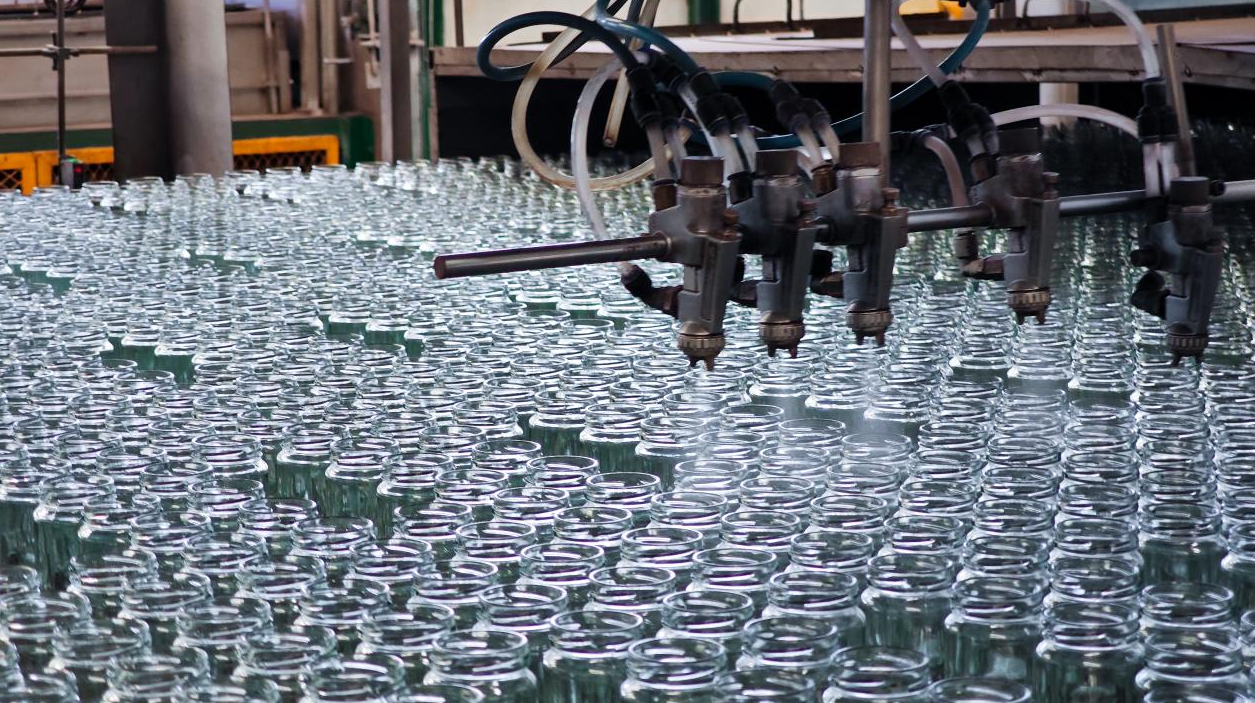
Seven Steps From Brief to Shipped Order
- Define jar family and end use — fill volume, product, closure. Output: a one-page spec.
- Scope compliance by market — EU framework + GMP, US coated-ware rules, destination national standard. Output: a document list.
- Select customization levers — output: a costed configuration.
- Develop or confirm mold and prototype — material development and 3D prototyping through to mass production. Output: an approved shape.
- Fix acceptance criteria in writing — AQL and test items before production. Output: an inspection plan.
- Produce and inspect — 100% airtightness, thermal shock, drop test, heavy-metal testing. Output: inspection report + COA.
- Ship and settle — FOB/CIF/EXW, balance against B/L copy.
Where Capability Is Actually Tested
The jar family decides what gets locked first. For a honey jar it is fill weight and labeling under the EU honey standard; for a jam jar it is the reserved name and composition under the EU jam standard. A spice jar turns on closure sealing against moisture pickup, a coffee jar on aroma retention and closure choice, and a candy or cookie jar on opening size versus product size. A candle glass jar is the exception — heat behavior is a safety variable under ASTM F2417. A mini glass jar is dominated by decoration cost per unit as volume falls, a large glass jar by handling weight and carton strength, and a milk or juice jar by closure performance rather than the body. Round and mason-jar formats carry most food and preserve volume, so the real negotiation is usually the jar-with-lid spec: the body is often the easy part, while the lid carries the performance risk.
Stated plainly, capability stops in a few places. The 500,000-per-month figure is line capacity, not a reservation for one SKU; orders above 50,000 pieces are quoted case by case; because the EU has no harmonized glass measure, destination documentation must be confirmed market by market; surface handling and decoration should be approved on a physical sample; and since after-sales is remote, any on-site commissioning support has to be planned separately.
Evidence From Operating Programs
A coffee processing plant in Australia runs a USD 1.8M annual contract value. A food processing plant packing pickled products runs USD 1.6M. A second, globally operating coffee plant runs USD 2M. Across all three the reported result is consistent — stable production meeting food-grade packaging requirements, with food-grade compliance, seal performance and resistance to the packed product as the deciding attributes. Contract durations are not disclosed.
FAQ
How do I confirm a glass food jar is food-contact compliant for my market?
Start from the framework, not one certificate. For the EU that is EC 1935/2004 plus EC 2023/2006, plus national provisions, since there is no harmonized glass measure. For coated or lacquered US ware and metal closures, add 21 CFR 175.300. For China, use GB 4806.5-2016. HK Rocsun holds ISO 9001, passes FDA and CE, and supplies COA ZTS2510311ZZRC (model IDG102) plus FDA and SGS lead and cadmium reports.
Can a Chinese OEM supply a jar with custom lid tooling?
Yes — cap and mold are both listed levers, with custom mold development supported. Brief the cap and the body together before tooling, because cap fit, liner material and coated finish all drive seal performance.
What MOQ, terms and payment apply?
MOQ 5,000 pieces for standard pricing, FOB/CIF/EXW terms, and 30% T/T deposit with 70% against a copy of the B/L.
How is quality validated before shipment?
AQL and test items are agreed in writing first. During production there is 100% airtightness, cap torque and thermal shock testing; before dispatch there is pre-shipment inspection with a report, drop-tested packaging, and FDA/SGS heavy-metal testing on materials and goods.
What lead time for 10,000–50,000 pieces?
20 days. A run of 5,000–10,000 pieces runs in 7 days, and above 50,000 pieces is negotiable. Sanity-check a large program against the 500,000-per-month line capacity before committing a launch date.
Conclusion
Food jar sourcing comes down to four things: whether the supplier can make the format and closure you need, whether the nine levers are genuinely available, whether the food-contact evidence matches your market, and whether the commercial parameters — 5,000 MOQ, banded lead times, FOB/CIF/EXW, 30/70 T/T — fit your cash flow. The fastest test of any supplier is still a brief with a volume, a destination market and a closure decision attached, because that turns a capability conversation into a quotable order.
Next step. Send your jar family, target fill volume, closure preference, decoration requirements and order volume, and the HK Rocsun team will respond with a configuration and quotation. Evaluating a custom mold or custom lid? Include your artwork and finish at first contact.