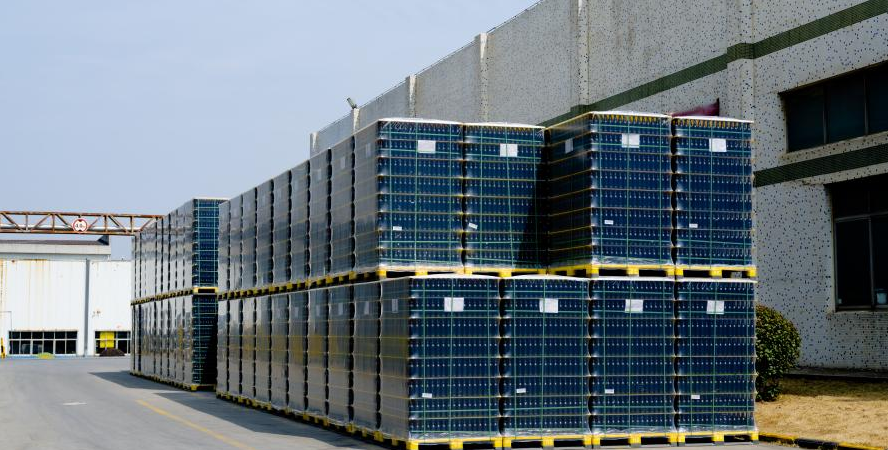
A printed label sells the drink on the shelf. What keeps your filling line running and your importer off your back is what the print job quietly depends on: artwork that holds through a 500,000-unit run, a liner that clears food-contact rules, a seal that survives a high-speed seamer, and a lead time that matches your bottling schedule.
This guide is for buyers past the browsing stage. If you have shortlisted a few Chinese OEM aluminum can manufacturers and want to work out what each can actually deliver, read on for what to verify, what evidence to ask for, how a printed-can project runs, and which parameters make or break a quote.
At HK Rocsun we are the Hong Kong marketing and export center for a mainland China manufacturing group. We handle international coordination from our Kowloon office; our partner metal packaging factories handle stamping, printing, forming and inspection. That position lets us tell you honestly which details cause real trouble.
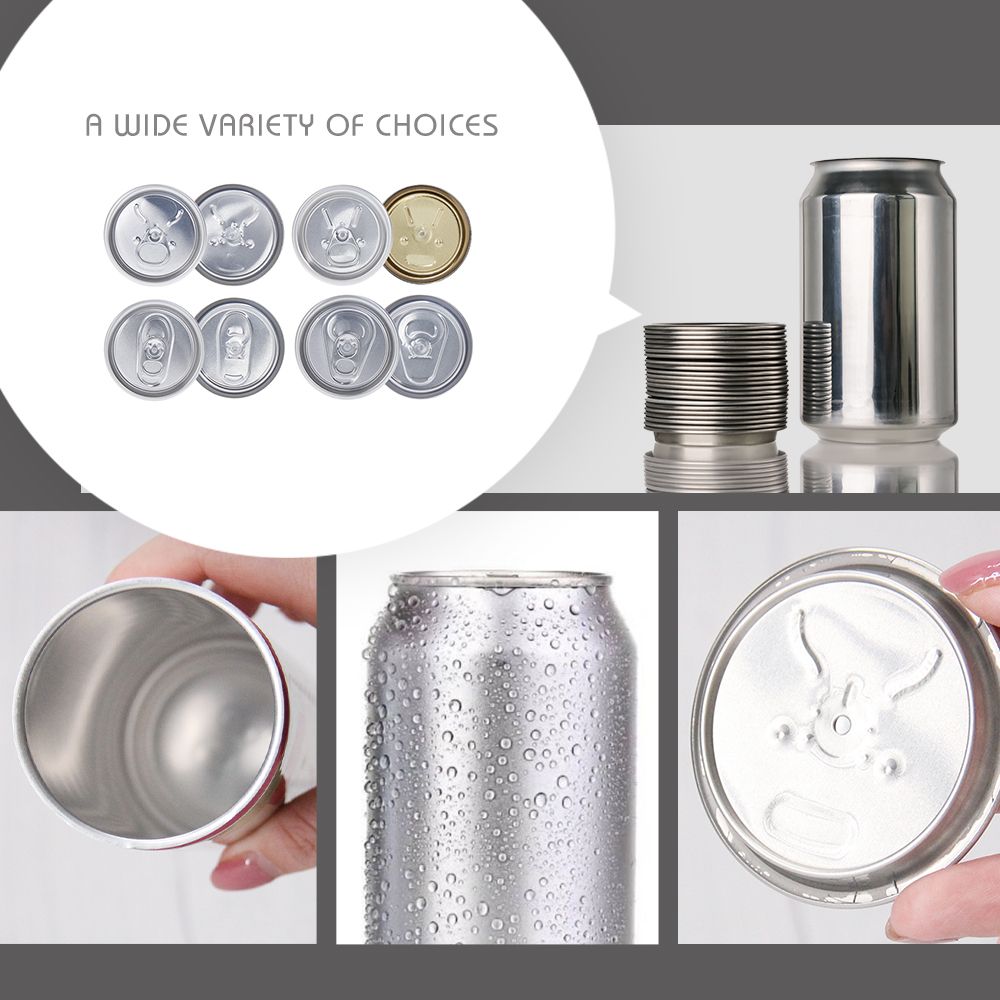
What "Custom Printing Capability" Really Means
"Can you print my logo " is not a differentiating question — every factory claims it. In practice the claim breaks into four layers, and each is testable before you release a purchase order.
Artwork engineering. Logos and fine graphics must survive the decoration process and stay identical from the first unit to the last. Ask "what does the can look like at unit 5,000 and at unit 500,000 ", not "can you print my file."
Decoration and liner compatibility. On a food-contact container, the outer print, the inner lining and any coating are one system. All three interact with your beverage, filling temperature and storage conditions.
Dimensional and seal consistency. A beautiful can is worthless if it jams your filling line. Body dimensions and the sealing interface have to hold tolerance.
Commercial thresholds. MOQ, lead-time tiers, inspection method and payment terms decide whether custom printing is even open at your volume.
Most sourcing mistakes come from judging only the first layer. A supplier who shows glossy samples but cannot document liner compliance, seal testing or a dependable lead time is asking you to carry that risk into production.
Why Print and Compliance Are Audited Together
Aluminum cans now carry beer, carbonated and functional drinks, and fruit wine, and the filling environment sets the requirements. Our documented conditions for the aluminum line are indoor, normal-temperature production, dry warehouse storage, and use on automatic high-speed filling and seaming equipment. The same documentation lists the buyer-relevant requirements: BPA-free inner coating, food-grade construction, high airtightness.
That pairing is why decoration cannot be decided apart from food safety. The printed surface is a brand asset; the liner is a compliance asset. A competent OEM answer covers both the graphic spec and the coating spec, each with evidence. Procurement is increasingly document-driven, too — buyers want test reports, COA verification and batch retention samples, because those are the artifacts that survive an importer's audit or a retailer's supplier questionnaire.
Our OEM Capability, in Verifiable Terms
These are the figures we can state, not promise:
- Production mode: OEM/ODM — your brand, artwork and spec drive output.
- Customization scope: logo, packaging, graphic, printing, color, coating, size, capacity.
- Monthly capacity: 300,000,000 pieces per month across the group.
- MOQ: 100,000 pieces.
- Lead time: 7 days for 1–10,000; 15 days for 10,001–500,000; negotiable above 500,000.
- Quality control: pre-shipment inspection.
- Engineering support: 15-engineer R&D team for design and prototyping.
- Certifications: ISO 9001, FDA, CE.
- Export footprint: 150+ countries and regions, 2,500+ clients worldwide.
- The practical reading: a 300 million-piece monthly capacity makes a 100,000-piece custom run a small slice of one month's output, so scheduling pressure is low. The 100,000-piece MOQ is the real gate — below it, standard mass-production pricing does not apply, and the 7-day tier for 1–10,000 pieces is a sampling window, not a retail channel.
The Compliance Evidence Behind a Printed Order
Decoration goes outside; the liner touches your drink, so this is where the audit lands. We specify a BPA-free inner lining, verify every incoming batch against its COA before production, and keep retention samples for traceability.
The document on file is a Bisphenol A (BPA) Test Report, ZTS25012103ERC, issued 12 February 2025 by Shenzhen ZTS Testing Service Co., Ltd. It covers aluminum can coating against Regulation (EC) No 1935/2004, (EU) 2018/213, (EU) 10/2011 and CEN/TS 13130-13:2005, applicable to the global market. Three controls sit behind it and should each show up in your pre-shipment report:
- Seal integrity — 100% airtightness testing on every unit before shipment, not sampling.
- Cap torque — controlled as a defined parameter.
- Coating adhesion — adhesion testing confirms the liner bonds to the substrate.
How a Printed Can Is Made
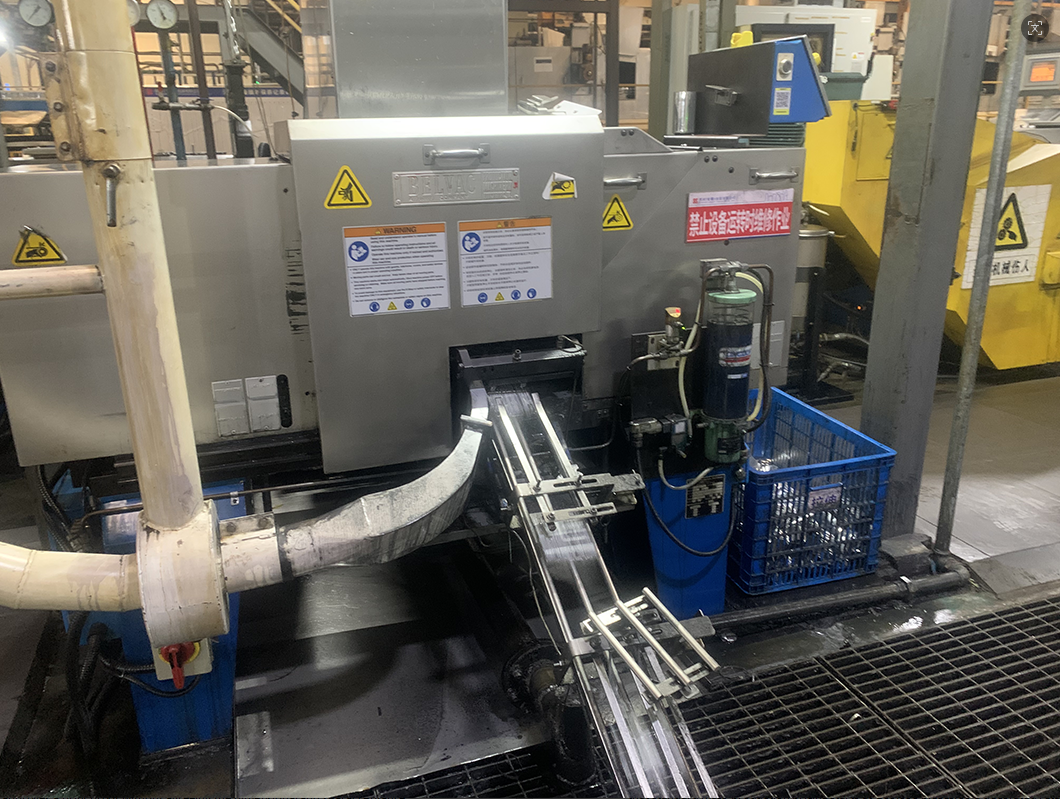
The metal line runs from raw material to finished-can inspection: aluminum coil is stamped, printed and dried, deep-drawn into the body, cleaned, then inspected — including a dedicated logo inspection against the approved artwork before packing. Because the print and the formed body come off the same line, print quality and dimensional quality are not two separate decisions. Approving a print proof without agreeing dimensional and seal acceptance criteria means you approved only half the spec.
Running a Custom-Printed Project, Step by Step
- Define the container and application. Start with the beverage, filling method and storage — not the artwork. Flag anything outside indoor, normal-temperature, dry-warehouse, high-speed-line conditions before quoting.
- Lock the decoration spec. Logo, graphic, printing, color, coating, size, capacity. Treat color and coating as engineering decisions, not cosmetic ones.
- Clear compliance before tooling. Request the lining spec, COA process and BPA documentation (report ZTS25012103ERC). Confirm the retention-sample practice.
- Approve a proof and fix acceptance criteria. Settle the graphic with the R&D team, then agree inspection items and AQL in writing — before production, not after.
- Schedule against the lead-time tiers. Place your volume in the right tier; a decorated retail run at or above MOQ usually sits in the 15-day tier.
- Choose Incoterm and payment. FOB, CIF or EXW. Payment is 30% T/T deposit before production, 70% T/T against a copy of the bill of lading.
Three Failure Modes to Test Before You Commit
Leakage / seal failure. Triggers: wrong lid torque, an aged/misaligned/contaminated/missing sealing ring, drop damage, pressure change, or an undetected defect. Control: 100% airtightness testing, rejecting failed units before packing, correct reassembly after washing, no over-tightening.
Coating delamination. Comes from substrate deformation after impact, or poor adhesion from a coating batch problem. Control: adhesion testing plus thermal-shock resistance. If a coating peels or flakes, pull the container from food use immediately.
BPA migration. Risk rises above the rated filling temperature, with prolonged contact from acidic or oily contents, an aged/damaged lining, or a non-compliant batch. Controls: BPA-free lining, COA verification on every batch, retention samples, and a stated temperature range.
Where a Printed Can Earns Its Keep
Our aluminum can record spans the categories where the printed surface carries real weight. Contract values are stated as reported; durations are not disclosed.
- Brewery, United States — $1.2M/yr. The can surface is the main brand carrier, so long-run print consistency matters.
- Fruit winery, United Kingdom — $800K/yr. Acidic fruit wine drives corrosion-resistance and sealing demands.
- Beverage plant, United Arab Emirates — $500K/yr.
- Beverage plant, Kazakhstan — $500K/yr.
- Fruit winery, South Korea — $400K/yr.
- Across these projects the reported outcome is consistent: stable production meeting food-grade requirements, with food-grade construction, good sealing and corrosion resistance cited. For a printed run, that's the signal — decoration delivered on a container already qualified for food-grade filling.
FAQ
Do custom-printed cans from a Chinese OEM meet food-contact rules?
Compliance is set by the liner and its verified data. We use a BPA-free lining, verify each batch against its COA, and keep retention samples. Report ZTS25012103ERC (12 Feb 2025) covers the coating against (EC) 1935/2004, (EU) 2018/213, (EU) 10/2011 and CEN/TS 13130-13:2005. Facility certification includes ISO 9001, FDA and CE.
What can be customized?
Logo, packaging, graphic, printing, color, coating, size and capacity, in OEM/ODM mode, backed by a 15-engineer R&D team for design and prototyping. At 300,000,000 pcs/month, decoration changes fit a normal schedule if agreed before tooling and printing.
What volume and payment terms?
MOQ 100,000 pcs, where standard pricing starts. Terms FOB, CIF or EXW. Payment 30% T/T deposit before production, 70% T/T against a copy of the B/L.
Can I approve print and quality before mass production?
Yes. Design/prototyping support plus pre-shipment inspection with the report provided before the goods leave; test items and AQL agreed up front. A dedicated logo-inspection step checks the print against approved artwork, and the report should also reflect 100% airtightness, cap torque control and coating adhesion testing.
How long does production take?
7 days for 1–10,000 pcs, 15 days for 10,001–500,000, negotiable above 500,000. A commercial run at or above MOQ usually lands in the 15-day tier, excluding shipping and pre-production sampling.
Bottom Line
Evaluating custom-printed cans means separating decoration from capability. HK Rocsun can print logos, graphics, colors and coatings on an OEM/ODM basis, at 300,000,000 pcs/month, on a line documented for food-grade, BPA-free, high-airtightness beverage use and backed by BPA report ZTS25012103ERC. The parameters that decide whether a project runs smoothly are the unglamorous ones: a 100,000-pc MOQ, a 15-day window for most volumes, pre-shipment inspection with agreed AQL, and a 30/70 T/T payment structure. Verify those four and read the coating documentation next to the artwork proof, and you're judging real capability — not a sample case.
Next step. Send your can format, print spec and target volume to the HK Rocsun team for a quote, or open a pre-production sample discussion before committing to a 100,000-pc run. Compliance documents can be reviewed before you order.
HK Rocsun International Packaging — Email: tom.ideabottle@gmail.com | Tel / WhatsApp: +86 185-5501-9935 | Website: https://www.rocsuneco.com/