Most buyers who start searching for “aluminum tin can” or “tin can packaging” are not looking for a catalogue page. They already know aluminum cans exist. What they are trying to figure out is whether a supplier can take a packaging concept—a fill volume, a finish, a shelf presence—and turn it into a can that runs cleanly on a filling line, shipment after shipment, without the print drifting or the seal failing.
That is a different kind of question. It is not about whether a factory can make a can. It is about whether the factory controls the variables that decide whether the can works for your product. HK Rocsun sits at the export end of a group with metal packaging production in Mainland China, and the projects we see most often fail not because the can itself is badly formed, but because the specification was never pinned down before the first production run.
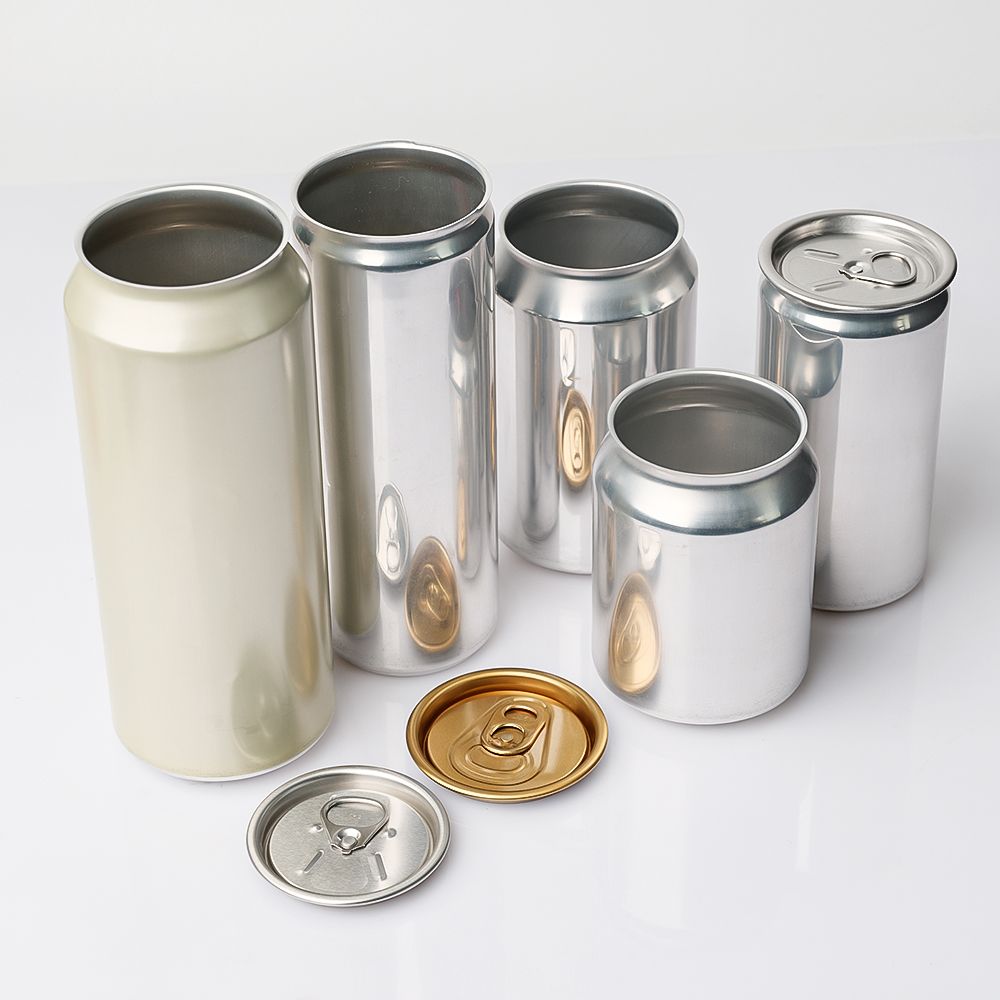
Here is a working guide to what actually matters in a custom aluminum can program, written from the supplier side of the table.
The Word “Tin Can” Hides a Specification Decision
Buyers use “tin can,” “aluminum can,” “beverage can,” and “metal can” almost interchangeably in search. But the base material matters, and so does the coating system, the closure type, and the inspection standard. An aluminum can and a tinplate can are not the same purchasing item, even if they look similar in a product photo. When you request a quotation, the approval drawing—not the keyword—defines what will be produced.
This is why a custom aluminum can program is not a commodity order. A standard soda can and a coffee can with a resealable lid may both be called “tin can packaging,” but they require different closure specifications, different torque settings, and different airtightness validation. If a supplier treats them as the same line item, the mismatch usually shows up at the filling stage, not on the sample.
What “Custom” Actually Covers
In a real OEM/ODM program, customization is not just a logo. The scope includes can dimensions and fill volume, internal coating, external printing and color system, lid or closure format, and secondary packaging. HK Rocsun’s metal packaging line handles aluminum can decoration, coating, and volume production, with the group’s manufacturing base reporting a monthly capacity of 300,000,000 pieces and an MOQ of 100,000 pieces for standard mass-production pricing.
Those numbers are useful, but they only tell you whether the supplier can handle your volume. The more important question is: which of those specification variables sit inside the supplier’s own process control, and which are subcontracted? A supplier with in-house printing and inspection can hold registration and color consistency. A supplier that outsources decoration cannot promise the same level of control, no matter what the brochure says.
The Production Sequence Is the Quality Sequence
A custom aluminum can moves through a fixed sequence: aluminum coil, stamping into a cup, deep drawing into the can body, cleaning, internal coating and external printing, drying, logo inspection, finished-can compliance inspection, and palletizing. Each step maps to a buyer risk.
Coil consistency affects forming yield and coating adhesion. Dimensional control begins at the deep-drawing stage—a can outside tolerance will create problems later on the seamer. Cleaning is not cosmetic; it prepares the surface for the lining and the ink. Printing is where brand risk concentrates: registration drift, incomplete drying, or a missed logo verification can turn a decorated can into rework.
For buyers evaluating a supplier, ask specifically about the inspection points after printing and before palletizing. A logo inspection and verification machine is a control point worth confirming. Pre-shipment inspection is only meaningful if the test items and acceptance criteria are agreed before production starts, not after the cans are boxed.
Food-Contact and Seal Integrity: What to Put in Writing
The parts of an aluminum can specification that cannot be checked by looking at the finished can are the ones that need documentation. Food-contact safety and seal integrity require a control chain: incoming material verification, lining specification, batch traceability, and end-of-line testing.
The aluminum can lining in this production system is BPA-free by specification. Incoming batches are checked against a Certificate of Analysis before production, and batch retention samples are kept for traceability. Before shipment, units go through 100% airtightness testing, with cap torque control where lids are used and coating adhesion testing for the internal lining.
The BPA test report ZTS25012103ERC, issued on 12 February 2025 by Shenzhen ZTS Testing Service Co., Ltd., covers aluminum can coating under Regulation (EC) No 1935/2004, (EU) 2018/213, (EU) 10/2011 and CEN/TS 13130-13:2005. That is a material-level document. It supports the lining declaration. It does not replace a fill trial with your actual beverage or food product, especially if you plan hot fill, long contact with acidic or oily contents, or extended storage.
| Risk | What usually triggers it | What the supplier should be able to show |
|---|---|---|
| BPA migration | Overheat hot fill, long acidic/oily contact, damaged lining, non-compliant batches | BPA-free lining spec, batch COA, retention samples, temp range |
| Leakage / seal failure | Wrong torque, faulty lid, missing seal ring, impact or pressure shift | 100% pre-shipment airtight test; torque control for lids |
| Coating delamination | Impact deformation, poor coating adhesion | Lining adhesion test, thermal shock resistance data |
These controls reduce risk. They do not make a can suitable for every filling condition. If your process sits outside the rated parameters, validate the lining against your product before committing to a production run.
Where Aluminum Cans Fit—and Where They Don’t
Aluminum cans have proven performance on automatic high speed filling and seaming lines for beverage, beer, fruit wine, and functional drink production. Real world projects feature a US brewery for canned beer, fruit wineries in Great Britain and Korea for canned fruit wine, plus beverage plants in Kazakhstan and the UAE for canned beverages. Every project achieved stable production complying with food?grade packaging requirements, with sealing performance and corrosion resistance as core strengths.
1.Coffee can applications
Coffee cans or cans fitted with lids require separate closure drawings, torque specifications and airtightness test methods. Do not assume standard beverage?can ends deliver identical performance to resealable lids under coffee filling and storage conditions.
2.Commercial fit considerations
- Mass production MOQ stands at 100?000 pieces. Seasonal runs of 20000 pieces sit below this mass production threshold.
- Custom cans remain achievable, yet sampling and tooling setup need open upfront discussion and cannot be treated as an afterthought.
- Decoration brings additional setup time and cost; print plates, colour approval and drying control come with non zero time and expense.
3.Material comparison guidance
- Glass: better suited when resealability and premium shelf presence are top priorities
- Rigid plastic: suitable for scenarios requiring low tooling cost or squeezability
- Aluminum: the right choice for lightweight, high barrier cans compatible with high speed lines and complete documented food contact and seal control records
No single material ranks universally “best”. Material selection should align with your fill volume, closure requirements, shelf life expectations and order pattern.
The Trend Buyers Are Actually Responding To
The aluminum can market is not short of capacity. What is short is documentation. Procurement teams increasingly ask for BPA-free lining statements, COA verification, batch retention samples, 100% airtightness records, coating adhesion data, and print verification—not because they are being difficult, but because their own quality systems require it.
That is the practical shift in custom aluminum can sourcing. The supplier who can answer those questions with records is easier to qualify and easier to keep on an approved vendor list. HK Rocsun’s role is to connect that documented production capability with international buyers who need the specification, the inspection record, and the export coordination in one relationship.
If you are building a specification file for a custom aluminum can project, the useful next step is not another brochure. It is a conversation about your fill volume, closure format, artwork timeline, and target order pattern—so the approval drawing reflects what will actually be produced.
FAQ
What is the minimum order quantity for custom aluminum cans?
The standard mass-production MOQ is 100,000 pieces. Below that, sampling and tooling setup need to be discussed separately.
Which Incoterms and payment terms apply?
FOB, CIF, and EXW are available. Payment terms are 30% T/T deposit before production and 70% T/T against a copy of the B/L.
How is quality checked before shipment?
Pre-shipment inspection can include a test report, 100% airtightness testing, cap torque control where lids are used, and coating adhesion testing. Agree the test items and AQL before production begins.
Is the inner lining BPA-free?
Yes. The lining is BPA-free by specification. Each incoming batch is checked against a COA, and retention samples are kept. The BPA test report ZTS25012103ERC covers aluminum can coating under the relevant EU regulations and standards.
Can the inner coating peel or flake?
Adhesion testing verifies bond strength. Impact deformation and poor adhesion in a specific coating batch are the main triggers. If the coating begins to peel or flake, the container should not be used for food or beverages.
What lead times apply to larger orders?
The published schedule is 7 days for 1–10,000 pcs, 15 days for 10,001–500,000 pcs, and negotiable above 500,000 pcs. Mass-production pricing starts at the 100,000-piece MOQ.