Most beverage brands start with volume: 330ml for beer, 355ml for craft soda, 500ml for functional drinks. Volume has to be decided, of course—but it tells you nothing about whether your seamer can run the can reliably.
What really determines compatibility is the can body style and the can end size. Bodies come in standard, sleek, and slim profiles; ends are commonly 200#, 202#, and 206#. Many buyers approve artwork and samples first, only to discover their seamer needs new tooling or even a retrofit. What follows is delay, rework, wasted print film, and rushed re-quoting.
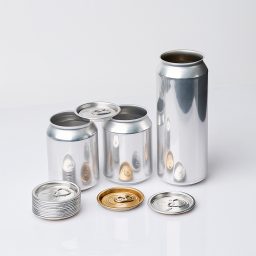
Remember this first: the can end matches the neck diameter, not the fill volume.
202#: The common choice for standard and sleek cans
Standard cans have a body diameter around 66mm; sleek cans sit around 57.4mm. Both use the 202 neck finish, roughly 52.5mm. That means a seamer already set for 202 can usually switch between a standard 355ml beer can and a sleek 330ml RTD can with only minor adjustments to the chucks and starwheels.
Standard profiles suit traditional beer, juice, and still beverages. Sleek profiles are a better fit for energy drinks, RTD coffee, and functional beverages—the taller, narrower body stands out on shelf.
200#: Slim cans need dedicated tooling
Slim cans have a body diameter around 53mm and use the 200 neck finish, roughly 50mm. They require dedicated seamer tooling. A line built for standard or sleek cans cannot run slim cans reliably without changing the relevant parts. Brands working on energy drinks, cold brew coffee, and small-batch beverages tend to miss this point.
206#: A system decision for large-format cans
206# is not simply an upgraded lid. It is a wider end, mainly for large-format, wide-neck cans of 24oz and above. It handles higher carbonation pressure and delivers a faster pour.
You cannot fit a 206# end onto a standard can body just because you want a wider mouth. If the neck geometry does not match and the seamer tooling is not calibrated, you get poor double seams, leakage risk, and frequent line stops. A 206# end must be confirmed together with the can body, neck, and seamer tooling—not ordered as a standalone item.
Plan around your seamer, not just a list of can sizes
A safer sourcing sequence starts with the seamer you already have:
- 202 seamer: standard and sleek cans, covering beer, juice, energy drinks, and RTD coffee.
- 200 seamer: slim cans, mostly 250ml single-serve formats.
- 206 seamer: large-format cans, with body, neck, and tooling confirmed as one set.
Confirm the equipment first, then decide can style and volume. This eliminates most compatibility problems.
Confirm the internal coating early
Internal coating is not a box you tick with “food-grade” and move on. For shipments to North America, the EU, and the UK, BPA-NI (BPA-non-intent) liners are the baseline requirement. Other markets may accept different coating options, but compliance should be confirmed before sampling.
High-acid juices, carbonated drinks, and high-salt functional beverages put extra stress on the liner around the score line and rivet area of the easy-open end. Porosity test reports, food-contact declarations, and relevant certification documents should be part of the pre-production approval pack—not an email sent after production has started.
What Rocsun Packaging can provide
Rocsun Packaging (HK) is the international export and marketing arm of IDEA Group, with manufacturing in Anhui. We supply glass, plastic, and metal packaging to food and beverage clients worldwide. Our aluminum beverage can range covers 250ml, 330ml, 355ml, 473ml, and 500ml.
The cans use food-grade aluminum, with BPA-free internal coating and a choice of SOT or EOE ends. Body options include standard, sleek, and slim. Decoration routes include full-can printing, matte and glossy finishes, and shrink sleeves. The factory operates under ISO 9001 and holds FDA and CE documentation. We support OEM and ODM, from specification matching and artwork setup to sample validation.
Standard mass production starts at 100,000 pieces. We support FOB, CIF, and EXW terms, and inspect each batch before shipment to catch seaming, coating, and printing issues before the cargo leaves the factory.
One cross-check before you order
Before approving artwork or paying for samples, put four things on the same page: target can format, can end size, existing seamer setup, and internal liner specification.
A can that looks great in photos and mockups can still cause downtime, product spoilage, and extra re-quotes if the neck dimension does not match your seamer. The right aluminum can is not just the one that holds your target milliliters. It is the can body, neck, and end combination your line can seam consistently, batch after batch. That technical conversation belongs before the first formal quotation.